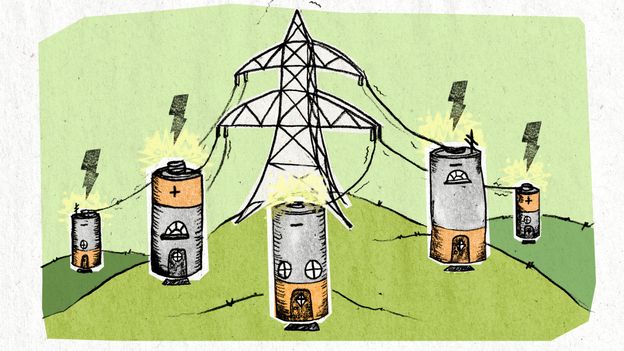
Vermont's largest source of electricity is no longer a power plant in the traditional sense. It is a network of batteries installed in thousands of ordinary homes, stitched together by the state's biggest utility, Green Mountain Power (GMP), into what is known as a virtual power plant. According to the BBC, that distributed system has quietly become Vermont's single biggest power source.
More than 5,500 customers have joined the programme, which installs two batteries per home for $55 (£41) a month under a 10-year lease. For residents like Pollyanna Bladyka of Springfield, the appeal was simple: her home used to lose power a dozen times a year, often for hours. Since the batteries were installed in 2024, she has not lost power once.
How Vermont's virtual power plant works
A virtual power plant aggregates thousands or even millions of consumer devices — home batteries, rooftop solar, smart thermostats and EV batteries — into one coordinated system that behaves like a conventional power plant on the wider grid. The system is orchestrated to reduce demand during peak hours, replacing the need to build extra fossil-fuel plants.
The concept has existed for decades but has gained momentum as energy demand rises and more distributed resources like rooftop solar come online. Virtual power plants are now being built from Germany to China, the BBC reports.
GMP's programme has turned that idea into everyday infrastructure. Bladyka says she was on the verge of buying a $12,000 (£9,000) gas generator when her electrician told her about the battery lease. She describes the batteries as being able to power her house for about two days if she keeps dishwashing and laundry to a minimum.
Virtual power plant capacity in the US
The United States now has more than 40GW of virtual power plant capacity, according to internal analysis by Wood Mackenzie cited by the BBC. That is still small next to roughly 600GW of natural gas and 200GW of coal, but a 2025 US Department of Energy report estimates 160GW could be unlocked by 2030 — equal to about 20% of the country's expected peak energy demand.